Different Types of SEO: On-Page, Off-Page & Technical SEO Explained

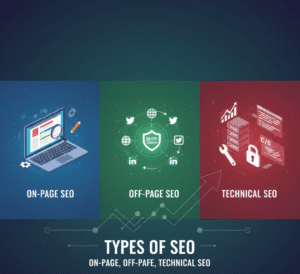
Different Types of SEO: On-Page, Off-Page & Technical SEO Explained (2025 Guide)
Search Engine Optimization (SEO) is the heartbeat of online visibility. In today’s digital race, having a website isn’t enough — it must be found, read, and trusted. Whether you’re running a small blog, a business site, or a global brand, SEO determines how easily your audience discovers you on Google. But here’s the thing — SEO isn’t just one single strategy. It’s made up of several layers that work together: On-Page SEO, Off-Page SEO, and Technical SEO.
Each type serves a distinct purpose. Think of your website like a house. On-Page SEO is how you decorate and arrange your rooms, Off-Page SEO is what neighbors say about you, and Technical SEO is the foundation and wiring that keeps it standing strong. Without one, the others can’t shine.
1. Introduction to SEO and Its Importance
SEO is the process of optimizing your website to increase visibility in search engines like Google, Bing, or Yahoo. It’s not just about rankings — it’s about building trust, offering value, and ensuring your audience finds exactly what they need. The right SEO strategy improves organic traffic, user experience, and even conversions.
In a world where over 90% of online experiences start with a search engine, ignoring SEO is like opening a store in the desert — beautiful, but invisible. From keyword research to site speed, every optimization effort you make signals to Google that your website deserves to be seen.
“Good SEO isn’t about tricking Google — it’s about partnering with Google to provide the best search results for users.”
— Phil Frost
There are three main types of SEO every digital marketer or website owner must understand to build a sustainable online presence. Let’s break them down.
2. What Are the Different Types of SEO?
SEO can be broadly categorized into three main types: On-Page SEO, Off-Page SEO, and Technical SEO. Each type plays a unique role, but together they form a complete ecosystem that drives long-term visibility and authority online.
| Type of SEO | Main Focus | Examples |
|---|---|---|
| On-Page SEO | Content & Keyword Optimization | Meta tags, headings, internal links |
| Off-Page SEO | External Authority & Backlinks | Backlinks from Forbes, BBC, Harvard.edu |
| Technical SEO | Website Performance & Structure | Page speed, mobile optimization, crawlability |
While these three areas overlap, each demands its own focus. On-Page SEO ensures your content speaks the language of both users and search engines. Off-Page SEO helps you build credibility through links and mentions from other authoritative websites. And Technical SEO ensures your website runs fast, securely, and smoothly for both users and Google’s bots.
Now, let’s dive deeper into the first — and perhaps most visible — type: On-Page SEO.
3. On-Page SEO: The Foundation of Visibility
On-Page SEO is everything you do within your website to make it search-engine friendly. It’s the art of optimizing content, HTML tags, URLs, and visuals — all while delivering value to your readers. Think of it as setting the stage for Google’s crawlers to understand exactly what your page is about.
Here are the key pillars of effective On-Page SEO:
- Keyword Optimization: Naturally include primary, secondary, and long-tail keywords throughout your content. Avoid keyword stuffing — it’s like over-salting a dish. Tools like SurferSEO or RankMath can help maintain balance.
- Title Tags & Meta Descriptions: These are your digital headlines. Write them to grab attention and include your target keyword early on.
- Header Tags (H1–H6): Use them to structure your content logically. Google loves hierarchy — and so do readers.
- Image Optimization: Compress images, use descriptive filenames, and add alt text. Fast, accessible images help both UX and SEO.
- Internal Linking: Link to related pages or blogs within your site. It improves navigation and distributes link equity.
- Schema Markup: Add structured data to help search engines display rich results (like FAQs, reviews, or ratings).
Content quality remains the ultimate ranking factor. A page that truly helps the reader will always outperform a keyword-stuffed one. Write naturally, answer user questions, and make sure your article is easy to skim. Remember — people don’t read on screens, they scan.
Pro Tip: Use tools like Yoast SEO or Ahrefs to audit your on-page efforts regularly. Google rewards consistency and clarity.
In short, On-Page SEO is where your SEO journey begins. It’s your handshake with Google and your first impression to readers. Without it, even the best backlink profile or technical setup can struggle to perform.
4. Off-Page SEO: Building Authority Beyond Your Website
Imagine your website as a talented musician. On-Page SEO is their skill — but Off-Page SEO is the applause. It’s what others say about your brand, the digital reputation you build through trust, mentions, and backlinks. In short, Off-Page SEO is about authority.
Google’s algorithm treats backlinks like votes of confidence. The more credible sites link to you, the more reliable your website appears. But not all backlinks are equal. A single backlink from Forbes or BBC carries far more weight than a dozen from unknown blogs. Similarly, EDU backlinks from institutions like Harvard or Stanford are seen as extremely trustworthy, given their domain authority.
Key Off-Page SEO Techniques
- High-Authority Backlinks: Earn links from reputable publications and industry websites. Guest posting on sites like Forbes or Entrepreneur can skyrocket your domain credibility.
- Guest Blogging: Contribute articles to relevant sites within your niche. Focus on offering genuine value — not just links.
- Broken Link Building: Find broken links on authoritative websites and suggest your content as a replacement. It’s a win-win strategy.
- Social Signals: Active social media engagement indirectly boosts SEO. The more your content is shared, the more visibility it earns.
- Brand Mentions: Even without backlinks, mentions of your brand name across the web build trust signals for Google’s E-E-A-T algorithm (Experience, Expertise, Authoritativeness, and Trustworthiness).
Off-Page SEO is not a one-day affair — it’s a marathon. You build relationships, earn trust, and slowly become an authority voice in your niche. Just like in real life, reputation takes time to grow but lasts a long time when built right.
| Strategy | Goal | Example |
|---|---|---|
| Guest Posting | Authority Building | Publishing on Forbes or HubSpot |
| EDU Backlinks | Trust & Credibility | Getting linked from Harvard.edu or Stanford.edu |
| Social Signals | Engagement & Visibility | Viral shares on Twitter, LinkedIn |
“If On-Page SEO is your voice, Off-Page SEO is your reputation. One builds, the other amplifies.”
— Digital Marketing Proverb
So, while your content is the heart of SEO, Off-Page SEO is the network of veins that connects it to the wider digital ecosystem. Ignore it, and your growth slows down; master it, and your brand becomes unshakable.
5. Technical SEO: The Engine Under the Hood
If your website were a car, Technical SEO would be its engine. It’s what determines how smoothly it runs, how fast it loads, and how efficiently Google can crawl and index it. You might have amazing content, but if your site is slow, broken, or difficult to navigate, search engines will hesitate to rank it.
Core Aspects of Technical SEO
- Website Speed: Page loading speed directly affects rankings and bounce rates. Compress images, use caching, and minimize JavaScript to hit that Core Web Vitals sweet spot.
- Mobile Optimization: With mobile-first indexing, your site must look perfect on smartphones. Use responsive design and test regularly with Google’s Mobile-Friendly Test.
- Secure Protocol (HTTPS): Sites without SSL certificates are flagged as “not secure.” Always use HTTPS — it’s a ranking factor.
- Crawlability and Indexability: Submit XML sitemaps, optimize robots.txt, and fix broken links. Search bots love clear directions.
- Structured Data & Schema: Add schema markup to help Google understand your content. It can help generate rich snippets like reviews, prices, or FAQs in SERPs.
- URL Structure: Keep URLs short, descriptive, and keyword-rich. Avoid unnecessary parameters or symbols.
Pro Tip: Use tools like Google Search Console, Screaming Frog, or Ahrefs Site Audit to detect crawl errors, duplicate content, and indexing issues before they impact rankings.
Technical SEO might sound intimidating, but it’s essentially the science of communication between your website and search engines. The smoother that conversation, the higher your site performs. Even the world’s most beautiful website can’t succeed if Google’s bots can’t navigate it efficiently.
| Technical SEO Element | Why It Matters | Tool to Check |
|---|---|---|
| Page Speed | Improves UX and ranking | Google PageSpeed Insights |
| Mobile Friendliness | Essential for mobile indexing | Google Mobile Test |
| Structured Data | Enables rich results | Schema.org / Rich Results Test |
In essence, Technical SEO ensures that your website performs like a finely tuned engine — fast, efficient, and fully optimized. Without it, all your content and backlinks would struggle to get noticed.
6. Local SEO: Winning Your Neighborhood
While global visibility is great, most businesses rely on local customers — and that’s where Local SEO steps in. It’s the strategy that ensures your business shows up when people nearby search for your products or services.
Think of it this way: if On-Page SEO makes you visible online, Local SEO makes you visible where it matters most — right in your community.
Essential Elements of Local SEO
- Google My Business (GMB): Claim and optimize your profile with accurate business details, hours, photos, and reviews. It’s your virtual storefront on Google Maps.
- NAP Consistency: Ensure your Name, Address, and Phone Number are identical across all platforms — from directories to social media.
- Local Citations: Get listed in online directories like Yelp, Yellow Pages, and local chambers of commerce websites.
- Customer Reviews: Encourage happy customers to leave positive reviews. Google rewards businesses with strong local reputations.
- Local Backlinks: Earn mentions from nearby newspapers, blogs, or local partners — it signals strong community presence.
Local SEO is particularly crucial for small businesses, restaurants, clinics, and service providers. Nearly 46% of all Google searches are looking for local information — meaning your next customer could be searching for you right now.
“Local SEO isn’t about competing globally — it’s about being the first choice in your own backyard.”
— Local Marketing Insight, 2025
With an optimized Google Business Profile, steady stream of reviews, and consistent NAP data, your business can appear in the Google Local 3-Pack — that coveted top section of map results most users click first.
Interesting Fact: Businesses in the top 3 local results receive almost 70% of all clicks for local searches. That’s a digital goldmine waiting to be tapped.
In conclusion, Off-Page SEO builds your authority, Technical SEO enhances your performance, and Local SEO amplifies your presence within your community. Together, they form the structural backbone of a complete SEO strategy — one that not only ranks but also connects, converts, and lasts.
7. Mobile SEO: Optimizing for the Small Screen
Let’s face it — the phone has become an extension of ourselves. More than 65% of all Google searches now come from mobile devices, making Mobile SEO not just important, but absolutely critical. If your website isn’t mobile-friendly, it’s like owning a store that can’t fit through the customer’s door.
Mobile SEO ensures your website looks and performs beautifully across all screen sizes. It’s about fast loading times, responsive layouts, and seamless navigation. Google’s mobile-first indexing means it primarily uses the mobile version of your content for ranking and indexing — not the desktop one.
Core Principles of Mobile SEO
- Responsive Design: Your layout should adjust fluidly across devices — no pinching, zooming, or horizontal scrolling.
- Speed Optimization: Compress images, use lazy loading, and leverage browser caching to pass Google’s Core Web Vitals metrics.
- Readable Fonts & Buttons: Avoid tiny text or cramped CTAs. Every tap should feel natural and effortless.
- Mobile-Friendly Pop-ups: Intrusive interstitials hurt user experience and SEO ranking.
Pro Tip: Use Google’s Mobile-Friendly Test to check your site’s mobile performance regularly. A few seconds of lag can cause users to bounce faster than you can say “404.”
Interesting Fact: Studies show that for every second delay in mobile load time, conversions can drop by up to 20%. That’s not just a ranking issue — it’s lost revenue.
8. Voice Search & Semantic SEO: The New Language of Search
“Hey Google, what’s the best coffee shop near me?” — this simple phrase represents the future of search. Voice Search Optimization and Semantic SEO are reshaping how we approach online visibility. The rise of AI assistants like Siri, Alexa, and Google Assistant means users are now talking to search engines instead of typing.
Voice Search SEO focuses on optimizing for natural, conversational queries. People tend to ask questions out loud — so instead of targeting “best SEO tools,” aim for “What are the best SEO tools for small businesses?”
Voice Search Optimization Tips
- Target Long-Tail Keywords: Use question-based phrases that reflect human speech.
- Featured Snippets: Structure your content in Q&A format to increase chances of appearing in “position zero.”
- Local Voice Optimization: Since many voice queries are local, ensure your Google Business profile is complete and accurate.
Meanwhile, Semantic SEO goes deeper — it’s about context, not just keywords. Google’s AI (like BERT and RankBrain) now understands the meaning behind search queries. It’s not enough to include keywords — your content must answer intent.
| Aspect | Voice SEO | Semantic SEO |
|---|---|---|
| Focus | Conversational Queries | Search Intent & Context |
| Optimization Example | “Hey Google, how do I fix slow websites?” | Content that explains causes, tools, and solutions |
| Goal | Answer spoken searches | Provide deeper, relevant information |
“In the world of voice and AI, SEO isn’t about matching words — it’s about matching meaning.”
As technology evolves, SEO is becoming more human. The websites that listen, understand, and respond conversationally will always win over those that just shout keywords into the void.
9. Comparing the Three Types of SEO
By now, you’ve seen how every type of SEO plays its own role — but how do they compare? Think of them as the three gears of a single machine. When one falters, the entire system slows down.
| SEO Type | Core Purpose | Main Focus | Key Tools |
|---|---|---|---|
| On-Page SEO | Content Optimization | Keywords, Headers, Internal Links | Yoast, SurferSEO, RankMath |
| Off-Page SEO | Authority & Trust | Backlinks, Brand Mentions, E-E-A-T | Ahrefs, Moz, SEMrush |
| Technical SEO | Performance & Structure | Site Speed, Mobile, Schema | Google Search Console, Screaming Frog |
Each type supports the other. For instance, strong On-Page SEO improves linkability, while Technical SEO ensures search engines can crawl and index your optimized pages efficiently. Together, they form the backbone of a holistic SEO strategy.
Final Thought: SEO in 2025 isn’t a checklist — it’s a conversation. Between your brand and your users. Between information and intent. Master these three areas, and you won’t just rank higher — you’ll connect deeper.
10. The Future of SEO: AI, Personalization & User Intent
Search Engine Optimization is evolving faster than ever — and 2025 marks a turning point. Algorithms are no longer static rulebooks; they’re adaptive, learning systems driven by artificial intelligence. AI SEO now shapes everything from keyword intent analysis to automated content suggestions. But where is all this heading?
Picture this: You open your laptop, type a question into Google, and within seconds, an AI-driven snippet answers it conversationally — summarizing data, offering citations, and even suggesting next steps. That’s not science fiction; that’s the near future of SEO.
Emerging Trends to Watch
- Search Generative Experience (SGE): Google’s AI experiments now provide dynamic summaries in search results. Websites that align their content with intent and structure data clearly will benefit most.
- Visual & Multimodal Search: Platforms like Pinterest Lens and Google Lens are turning images into search queries. Optimizing for image SEO and metadata is becoming essential.
- Hyper-Personalized Results: AI analyzes user history, device type, and even mood signals. Relevance is no longer universal — it’s individual.
- E-E-A-T Evolution: Experience, Expertise, Authoritativeness, and Trustworthiness remain vital. But now, real-world proof — author bios, citations, and transparent sourcing — plays a bigger role.
In short, the future belongs to websites that feel human — those that provide answers, not just information. AI can’t replace empathy, storytelling, or emotional connection. That’s your advantage.
“SEO of tomorrow isn’t about beating the algorithm — it’s about understanding the audience behind it.”
Interesting Fact: Google processes over 8.5 billion searches daily, and nearly 15% of them are brand-new. That means even Google’s AI is learning something new every single day — and so should we.
11. Integrating All SEO Types into a Unified Strategy
Think of SEO as a puzzle — On-Page, Off-Page, and Technical are its pieces. Individually, they’re powerful; together, they form a masterpiece. The challenge for most businesses isn’t knowing what to do — it’s connecting the dots.
How to Combine Them Effectively
- Start with Technical SEO: Fix crawl errors, improve speed, secure your site (HTTPS), and ensure schema markup is in place. This creates a healthy foundation.
- Then Build On-Page Strength: Craft meaningful, keyword-optimized content that answers user intent. Use internal linking strategically to pass authority.
- Finally, Expand Off-Page Authority: Gain backlinks from credible sources like Forbes, BBC, or even EDU sites like Harvard and Stanford. Quality trumps quantity here — one strong backlink can outperform hundreds of weak ones.
Consistency is key. SEO isn’t a one-time effort; it’s a long-term relationship with your audience and search engines. When all three pillars — On-Page, Off-Page, and Technical — work together, your brand earns trust naturally, not artificially.
| SEO Type | Main Goal | Core Metrics | Key Tools |
|---|---|---|---|
| On-Page SEO | Relevance & Engagement | CTR, Bounce Rate, Dwell Time | SurferSEO, Yoast, RankMath |
| Off-Page SEO | Authority & Trust | Domain Rating, Backlink Quality | Ahrefs, SEMrush, Moz |
| Technical SEO | Performance & Accessibility | PageSpeed, Crawl Index, Schema | Google Search Console, Screaming Frog |
Pro Tip: Revisit your SEO strategy every 3–6 months. Algorithm updates can change ranking factors overnight. Stay adaptable, stay informed, and always prioritize user experience.
Conclusion: The Art and Science of SEO
SEO, at its core, is a balance between art and science — between logic and empathy. The algorithms will keep changing, but one thing never does: the need for genuine, human connection. When your content educates, entertains, and empathizes, Google notices — but more importantly, so do people.
Whether it’s an On-Page optimization that improves readability, a Technical tweak that reduces load time, or an Off-Page link from a trusted site — every improvement brings your website one step closer to its true potential.
Final Note: SEO isn’t just about search engines — it’s about trust. Build that, and rankings will follow naturally.
Frequently Asked Questions (FAQs)
- What are the 3 main types of SEO?
On-Page SEO, Off-Page SEO, and Technical SEO. Together, they ensure visibility, authority, and user satisfaction. - How often should I update my SEO strategy?
Ideally every 3–6 months, or whenever a major Google algorithm update rolls out. - What’s the difference between backlinks and internal links?
Backlinks come from external websites, while internal links connect pages within your own site. - Are EDU backlinks really valuable?
Yes, .edu domains from universities like Harvard or Stanford carry strong authority and trust signals. - Is mobile optimization still necessary in 2025?
Absolutely. Google’s mobile-first indexing prioritizes mobile usability for rankings. - Can I rank without backlinks?
It’s possible for low-competition keywords, but backlinks remain crucial for authority and long-term visibility. - How does voice search affect SEO?
Voice queries are conversational. Optimize for natural language and long-tail, question-based keywords. - What tools are best for SEO beginners?
Google Search Console, Yoast SEO, Ahrefs (free version), and Ubersuggest are great starting points. - Does AI-generated content help SEO?
Only if edited carefully for human readability, accuracy, and depth. Google rewards authentic, expert-driven content. - What’s the #1 SEO rule?
Write for humans first, optimize for search engines second. Authentic value always wins.
©2024 NSYUS. All rights reserved

Leave a comment